
Who We Are
2026-2030 Executive Committee
The IFCN is governed by a ten-member Executive Committee consisting of four Officers, four Chapter Representatives, and the Editors-in-Chief of the Federation's two journals. Executive Committee members serve four-year terms.
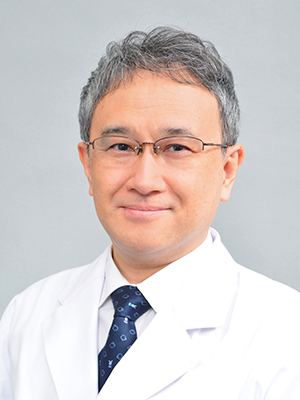
Riki Matsumoto
President
Japan
Riki Matsumoto (Japan)
Riki Matsumoto, M.D., Ph.D., is Professor and Chair of the Department of Neurology and Deputy Dean at Kyoto University Graduate School of Medicine, Japan. He graduated from Kyoto University Faculty of Medicine in 1994 and earned his Ph.D. in 2003 under Prof. Hiroshi Shibasaki. During his clinical fellowship in epilepsy and clinical neurophysiology at the Cleveland Clinic, he developed the cortico-cortical evoked potential (CCEP) method with Drs. Hans Lüders and Dileep Nair. He chaired Neurology at Kobe University from 2018 before returning to Kyoto in 2024.
His research focuses on the physiology and pathophysiology of the human brain connectome, particularly in epilepsy, and extends to the dementia–epilepsy interface, network neuromodulation, and wearable EEG devices. His honours include the Ellen Thomas Award (Cleveland Clinic), the Juhn and Mary Wada Award (JES), and the Excellent Teacher Award (JSN). His guiding motto is "World Class Care, Research and Education."
He is President of the Japanese Society of Clinical Neurophysiology and Vice President of the Japan Epilepsy Society. As President of the IFCN, he is committed to building "One IFCN" through global education, interdisciplinary research, and mentorship of the next generation.
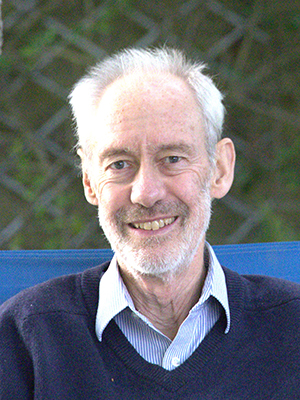
Jonathan Cole
Past President
United Kingdom
Jonathan Cole (United Kingdom)
Jonathan Cole, MA, MSc, DM (Oxon), FRCP, is a Professor at Bournemouth University and was a consultant at University Hospitals, Dorset until recently. He qualified from Oxford and the Middlesex Hospital in London and undertook research in Oxford and Southampton. His main areas of empirical research are in deafferentation, sensory loss and motor control. He studied with Oliver Sacks as a medical student and has written six books on the subjective experience of chronic neurological impairment related to deafferentation, spinal cord injury, and facial difference, and one on Anton Chekhov’s medical and humanitarian work. He is a past President of the British Society for Clinical Neurophysiology and the Europe, Middle East and Africa Chapter of the IFCN, a past co-chair of the IFCN Education Committee and is the current past President of the IFCN. He also chaired the 2006 ICCN in Edinburgh.
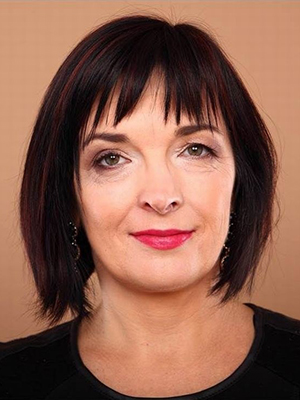
Andrea Antal
Treasurer
Germany
Andrea Antal (Germany)
Andrea Antal is a biologist with over 35 year’s laboratory work experience relating to human clinical studies and with an extensive background in research and research training in the fields of neurology and clinical neurophysiology. She studied in Hungary, Szeged and worked in the United States, in New York and Omaha, Nebraska, as a PhD student and postdoctoral fellow for three years. Starting from 2001, she has had a pivotal role in building up and coordinating the activities in the visual and later the pain laboratories in Göttingen, at the Department of Clinical Neurophysiology and Neurology, University Medical Center, Göttingen, Germany. She is the head of the Non-Invasive Brain Stimulation Laboratory, at the Department of Neurology, UMG. Her research team has robust experience in development and application of transcranial brain stimulation techniques. Between 2022-2026 she served as the Vice President of the European Society for Brain Stimulation and leader of the mentoring program of the International Federation of Clinical Neurophysiology, Europe- Middle East- Africa Chapter, as Member-at-Large.
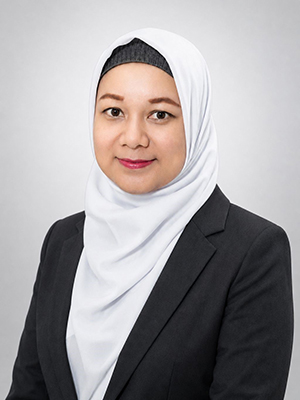
Fitri Octaviana
Secretary
Indonesia
Fitri Octaviana (Indonesia)
Fitri Octaviana is a lecturer at the Faculty of Medicine, Universitas Indonesia, and a Senior Consultant in Epilepsy and Clinical Neurophysiology at Dr. Cipto Mangunkusumo Hospital in Jakarta, Indonesia. Her principal areas of expertise are electroencephalography (EEG), epilepsy, and status epilepticus. In her clinical practice, she also performs nerve conduction studies (NCS), electromyography (EMG), and intraoperative neurophysiological monitoring (IOM), and provides specialist care for patients with peripheral nerve and neuromuscular disorders. She currently serves as Chair of the Indonesian Clinical Neurophysiology Association and previously served as Secretary of the Asian-Oceanian Chapter of the International Federation of Clinical Neurophysiology (IFCN). Through her clinical practice, teaching, research, and professional leadership, she is committed to advancing epilepsy care and clinical neurophysiology in Indonesia and internationally.
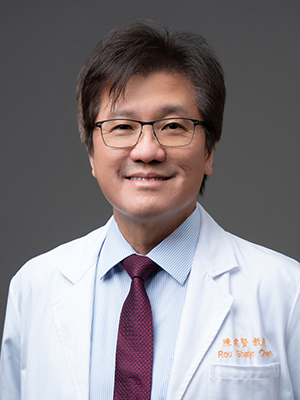
Jeffrey Chen (Rou-Shayn Chen)
Asia-Oceania Chapter Representative
Taiwan
Jeffrey Chen (Rou-Shayn Chen) (Taiwan)
Jeffrey Chen (Rou-Shayn Chen) is a professor and senile attending physician at Chang Gung Memorial Hospital (CGMH), Taipei, Taiwan. He chaired the Department of Movement Disorders at CGMH for more than 10 years, from 2004 to 2014. He served as President of the Taiwan Movement Disorders Society (TMDS) from 2011 to 2013 and President of the Taiwan Neurological Society from 2019 to 2021. Since November 2025, he has been the President of the Asia-Oceania Chapter of the International Federation of Clinical Neurophysiology (AO Chapter -IFCN)
His major clinical work focuses on the diagnosis and pharmacological intervention of Parkinson's disease and dystonia. He was a pioneer of botulinum toxin injection in Taiwan. His research focuses on the neurophysiology of cortical plasticity, repetitive transcranial magnetic stimulation with the theta burst paradigm, and transcranial low-intensity ultrasound stimulation. He has also delved into the complex issues of non-motor symptoms and gait problems in patients with Parkinson's disease, contributing to our understanding of the condition.
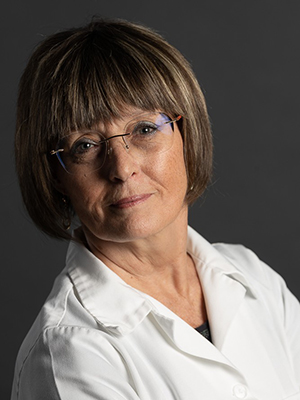
Anita Kamondi
Europe, Middle East, and Africa Chapter Representative
Hungary
Anita Kamondi (Hungary)
Prof. Dr. Anita Kamondi is a distinguished Hungarian neurologist and clinical neurophysiologist. She currently serves as the Head of Neurology in the Department of Neurosurgery and Neurointervention at Semmelweis University in Budapest, Hungary.
Professor Kamondi graduated with her MD from the Medical University of Pécs. She later earned her PhD and Doctor of Sciences degrees from the Hungarian Academy of Sciences. Her extensive academic training includes prestigious doctoral and postdoctoral research fellowships at Rutgers University in the United States and the University of British Columbia in Canada.
Throughout her career, she served as the President of the Hungarian Society of Clinical Neurophysiology. She is a dedicated educator, supervising numerous PhD students and postdoctoral fellows. Professor Kamondi is highly active internationally, serving as the President of the Europe, Middle East, and Africa Chapter of the IFCN, as well as the co-chair of the IFCN Scientific Committee. She has authored over 150 scientific publications, capturing more than 5000 independent citations.
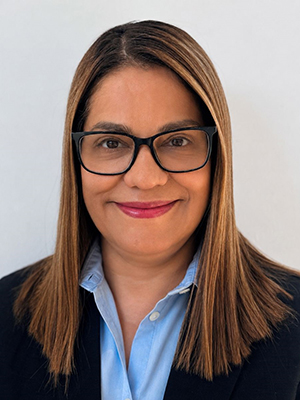
Claudia Paz Navarro
Latin America Chapter Representative
Mexico
Claudia Paz Navarro (Mexico)
Dr. Claudia Paz Navarro is a Mexican neurologist and clinical neurophysiologist based in Guadalajara, Jalisco. She is Head of the Department of Clinical Neurophysiology at Hospital Real San José and Director of Neurovie®, a private clinical neurophysiology practice. She completed her Neurology training at Centro Médico Nacional Siglo XXI and her Clinical Neurophysiology training at the National Institute of Neurology and Neurosurgery in Mexico. She holds master’s degrees in Neuroscience from the University of Barcelona and in Sleep Medicine from Pablo de Olavide University. Her extensive clinical work includes intraoperative neurophysiological monitoring, EEG, EMG/nerve conduction studies, evoked potentials, and transcranial magnetic stimulation. She has served as President of the Mexican Society of Clinical Neurophysiology and President of the Mexican Council of Clinical Neurophysiology. She currently serves as President of the Latin American Chapter of the IFCN and Treasurer of the Mexican Council of Clinical Neurophysiology.
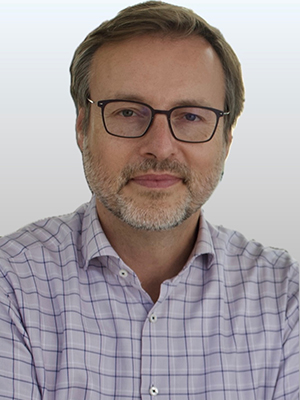
Cecil Hahn
North American Chapter Representative
Canada
Cecil Hahn (Canada)
Dr. Cecil Hahn is Professor of Paediatrics and the Michael Bahen Chair in Epilepsy Research at the University of Toronto. He serves as a Neurologist and Clinician-Investigator at The Hospital for Sick Children, where he directs the Critical Care EEG Monitoring Program and leads a program of patient-focused research among critically ill children to better understand how seizures occurring during critical illness contribute to brain injury and neurodevelopmental outcome. His research group also investigates the utility of quantitative EEG trending displays to assist with seizure identification in the ICU. Dr. Hahn’s clinical interests include complex pediatric epilepsy, neurocritical care and neonatal neurology. He has served as President of the American Clinical Neurophysiology Society and the Canadian Association of Child Neurology, and currently serves as an Associate Editor of the Journal of Clinical Neurophysiology, Chief Examiner of the Canadian National EEG Examination and Incoming President of the Canadian Neurological Sciences Federation.
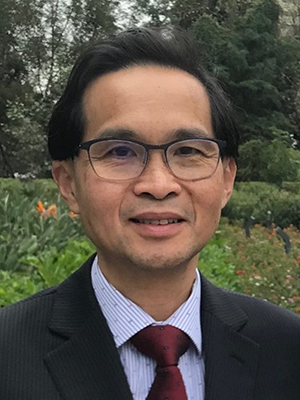
Robert Chen
Editor-in-Chief, Clinical Neurophysiology
Canada
Robert Chen (Toronto, Canada)
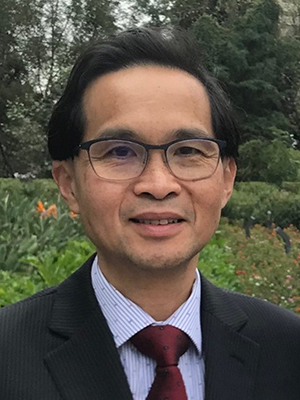
Dr. Robert Chen is currently Professor of Medicine (Neurology) at the University of Toronto and Senior Scientist at the Krembil Brain Institute. His editorial experience includes the Editor-in-Chief of the Canadian Journal of Neurological Sciences and Associate Editor for Movement Disorders. His clinical and research interests include the neuromodulation techniques such as transcranial magnetic and ultrasound stimulation, neurophysiology of movement disorders, mapping of brain connectivity using functional magnetic imaging and electroencephalography, electromyography and neurophysiological assessment of the respiratory system. He has published over 460 research papers with a Google Scholar H-index of 122. In 2022, he published a book on transcranial magnetic stimulation and edited two volumes of Handbook of Clinical Neurology on Respiratory Neurobiology.

Margitta Seeck
Editor-in-Chief, Clinical Neurophysiology Practice
Switzerland
Margitta Seeck (Switzerland)
Margitta Seeck, MD, is the Director of the EEG & Epilepsy center since 1995, which became a reference center for difficult-to-treat epilepsies in adults and children on both a national and an international level. Her main interests are scalp and intracranial EEG, imaging in epilepsy, epilepsy surgery, corticography and cognitive evoked potentials in epilepsy patients. She is author of more than 180 papers on epilepsy in national and international journals. In 2018, she was awarded with the Hans Berger Preis of the American Society of Clinical Neurophysiology and IFCN. She is currently on the board of the Swiss national science foundations and expert for other national science agencies. She is Past President of the Swiss Neurophysiology Society and is still actively involved in teaching activities of the Society. She is the Editor-in-Chief of Clinical Neurophysiology Practice of the International Federation of Clinical Neurophysiology.